Origine Cycles | Industrial customization in pull flow
Valenciennes, France · ~40 employees · Design, painting and assembly of carbon bicycles
Visit: March 9, 2024

Context & positioning
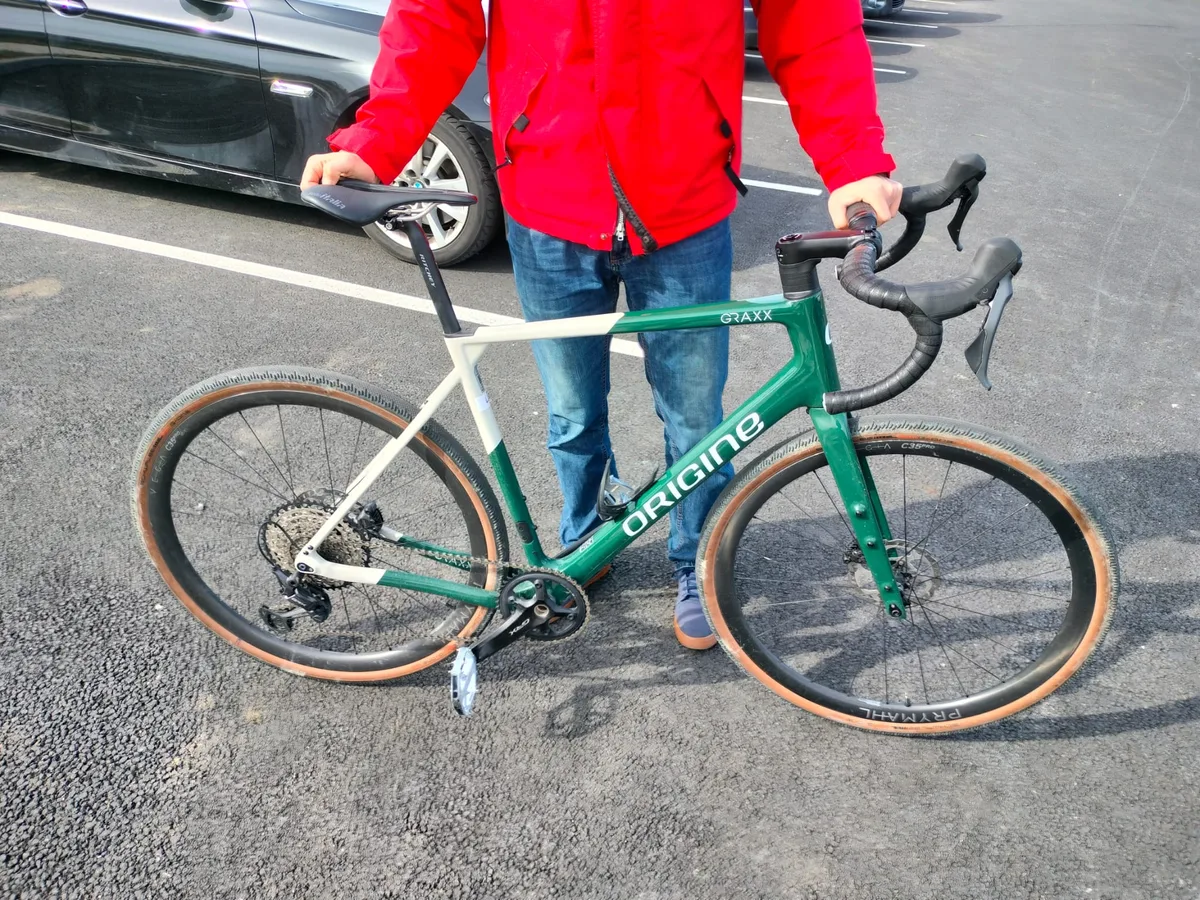
Origine Cycles is a brand historically established in northern France, founded in 2012 by Yves Amiel, Pierre-Henri Morel and Rémy Lefevre. The company carries out design, testing, painting and assembly at its Valenciennes facility, while carbon frames are manufactured in Taiwan. Primarily specialized in road and gravel bikes, Origine has progressively diversified by offering electric bikes (road and gravel), city bikes and mountain bikes. Bikes are fully customizable: the customer configures their bike directly on the website, choosing components and paint color. The company produces approximately 30 to 35 bikes per day and has experienced steady growth since inception.
Production flow
Customer configuration
(website) → Carbon frame retrieval/ordering → Individual painting (dedicated booth) → Component preparation (cart + customer sheet) → Assembly → Quality control → Delivery or factory pickup
Workshop organization
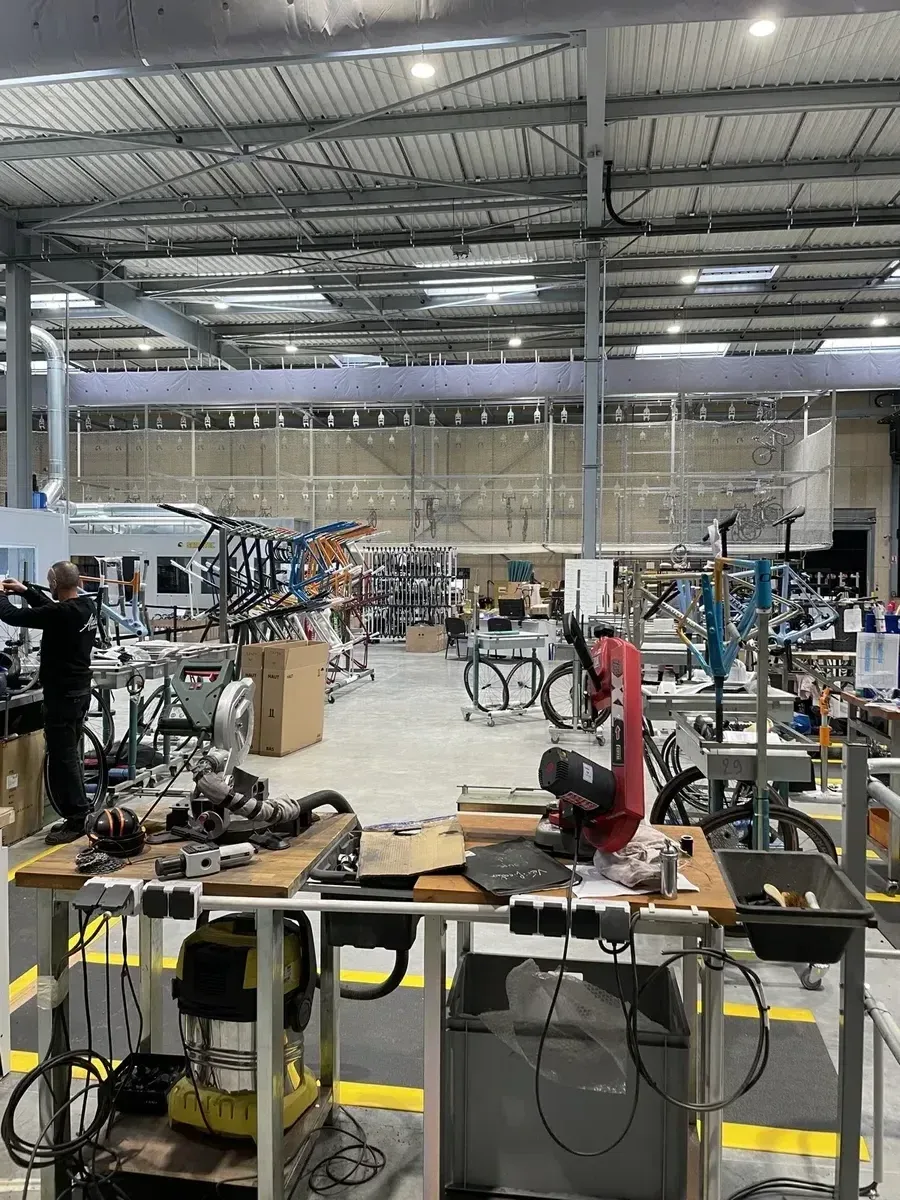
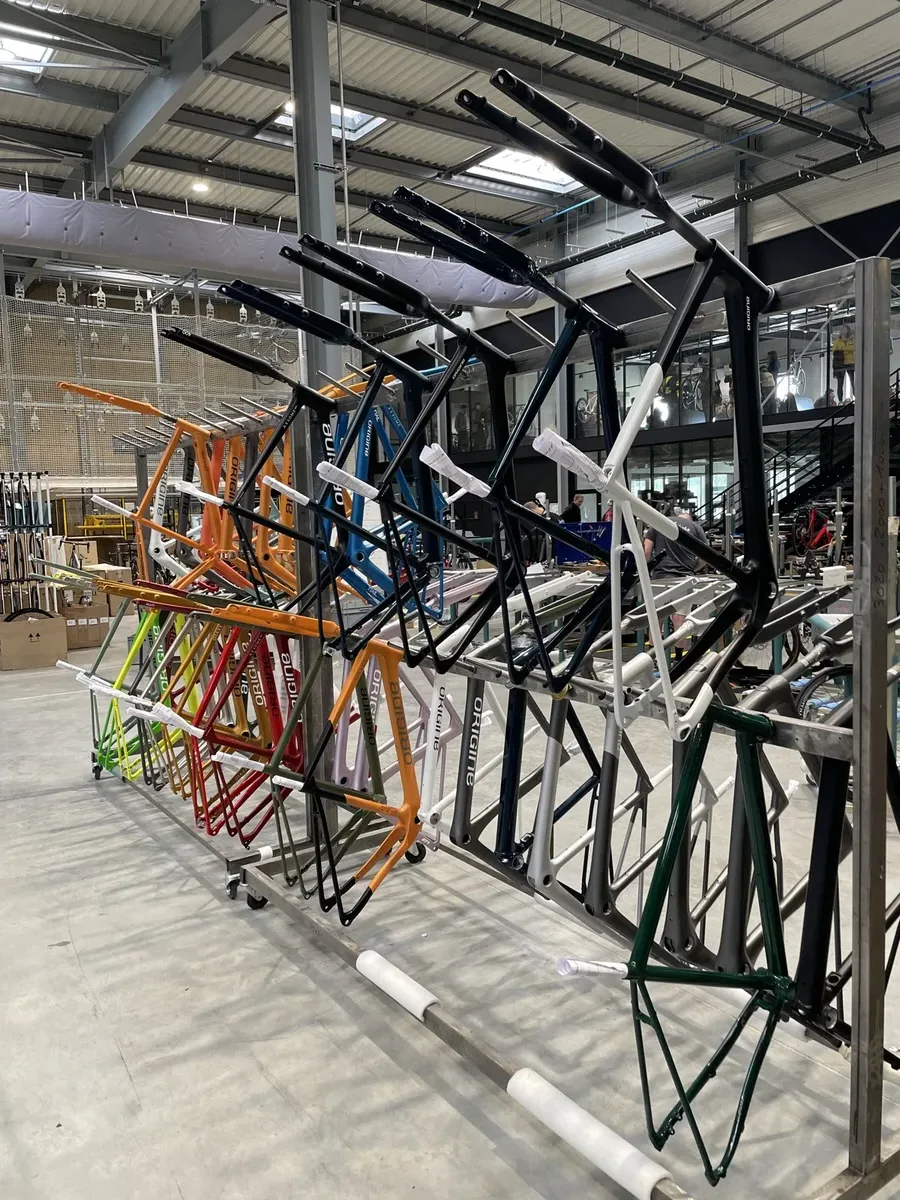
The workshop is recent, organized with wide and well-lit work areas allowing operators to work in good conditions. A conveyor system transports bikes between the different production stages, particularly between the paint booth and assembly stations. Each bike is individually painted in independent paint cabins, as each customer can choose a custom color. Components are prepared in organized carts with dedicated boxes and a customer sheet, enabling structured and error-free assembly.
Production management analysis
Production is based on a pull flow triggered by the customer order: the online configuration generates the production order, the retrieval of the corresponding frame and the preparation of components. Visual management is well established, with logic close to kanban and very little intermediate inventory. Quality controls are carried out mainly at the end of production, but an important inspection is performed upon reception of carbon frames to verify their conformity. Carbon bike assembly requires the systematic use of torque wrenches to respect tightening specifications.
Strengths
- Pure pull flow triggered by online customer configuration
- Full customization (geometry, components, color) without sacrificing throughput
- Conveyor system and individual paint cabins: controlled industrial flow
- Visual management with dedicated carts and customer sheets
- Solid partnerships with major equipment manufacturers (Shimano, SRAM, DT Swiss)
Areas for improvement
- Dependency on carbon frame subcontracting (Taiwan): loss of control over lead times and frame quality
- Quality control concentrated at end of production: risk of late non-conformity detection
- Extensive customization = complex logistics and higher costs for the customer
Key takeaway
It is possible to produce highly customizable bikes at an industrial pace, but this requires very rigorous parts management, complex logistics and a perfectly orchestrated pull flow. The Origine model shows that an online configurator can drive the entire production chain, from customer choice to final assembly, if properly maintained.